Mealglance guides
Protein, carbs and fat, explained
Mealglance team · Updated 29 October 2026 · 5 min read
Calories describe the energy in food. Macros help you see where that energy comes from. When you look at protein, carbs and fat together, you get more context for a meal than a calorie total alone can give you.
You do not need to make every meal fit an exact split to understand these numbers. This guide covers what each macro does and how to read your record over time. It is general information for adults aged 18 and older, not medical advice or a personal eating plan.
What macros are
Macros is short for macronutrients: protein, carbohydrate and fat. These are the three nutrients that give you energy. Food often contains a mix of them, so a meal can contribute to all three totals at once.
| Macro | Energy per gram |
|---|---|
| Protein | 4 kcal |
| Carbohydrate | 4 kcal |
| Fat | 9 kcal |
Alcohol also provides energy, at 7 kcal per gram. The table is a simple way to understand the relationship between macro grams and calories, rather than a reason to calculate every bite by hand.
For example, a meal with 30 g protein, 50 g carbs and 15 g fat gives you:
30 × 4 + 50 × 4 + 15 × 9
120 + 200 + 135 = 455 kcal
Grams tell you the amount of a nutrient. Calories tell you the energy it provides. Because fat gives more energy per gram, equal weights of different macros do not contribute equal amounts of energy.
Protein
Your body uses protein to build and maintain muscle and to repair tissues. Protein can also help with fullness. It is useful to recognize where it appears in your meals, whether your food comes mainly from plants, animal sources or a mix.
Common sources include beans, lentils, tofu, eggs, fish, poultry, meat, milk and yogurt. A meal does not need a separate protein product to contain protein. Everyday foods can contribute to your daily total, and a mixed dish may contain several sources.
A general adult reference is 0.8 g of protein per kg of body weight per day, often described as the minimum for most adults. Higher intakes are common for active people. This is general information, not advice about the right intake for you. Your needs can depend on your activity, life stage and health; ask a qualified professional if you need an individual target.
Carbohydrates
Carbohydrates are a main energy source for your body. You will find them in rice, bread, pasta, oats, potatoes, fruit, beans and milk, as well as in sugars. These foods bring different combinations of nutrients, tastes and textures to a meal.
Fiber is also a carbohydrate. About 25–38 g of fiber a day for adults is a common guideline, with needs varying by person. Foods such as whole grains, vegetables, fruit and pulses can contribute fiber alongside other nutrients. The fiber number adds context to the carbohydrate total.
A carb total alone does not tell you everything about a food, and it is not a rating. You can look at the whole meal, your appetite and the foods you enjoy alongside the numbers. Carbohydrates do not need to be treated as a category to avoid.
Fat
Your body needs fat for hormone function and to absorb vitamins A, D, E and K. Common sources include oils, nuts, seeds, avocado, dairy foods, eggs and fish. Some fat is visible, while some is mixed into foods or added during cooking.
At 9 kcal per gram, fat provides more energy per gram than protein or carbohydrate. Small amounts can therefore add up quickly: one tablespoon of oil is about 120 kcal. That is useful context when you check a meal estimate, especially if the oil is no longer visible.
This does not make fat a food score. Recording the oil in a pan or the dressing in a salad simply helps the total reflect what you ate. You can include those details in a meal note when a photo cannot show them.
How to read a macro split
A macro split usually describes the percentage of total energy that comes from each nutrient. It is different from comparing their gram totals. The worked example above shows why: each gram of fat contributes more energy than each gram of protein or carbs.
The US Dietary Reference Intakes give these acceptable ranges for adults:
- Protein: 10–35% of energy.
- Carbohydrate: 45–65% of energy.
- Fat: 20–35% of energy.
These are broad reference ranges, not a requirement for every plate. A single meal does not need to hit them. Your pattern over the week matters more than making lunch match a particular percentage. Meals can vary with your schedule, appetite and preferences.
How Mealglance shows macros
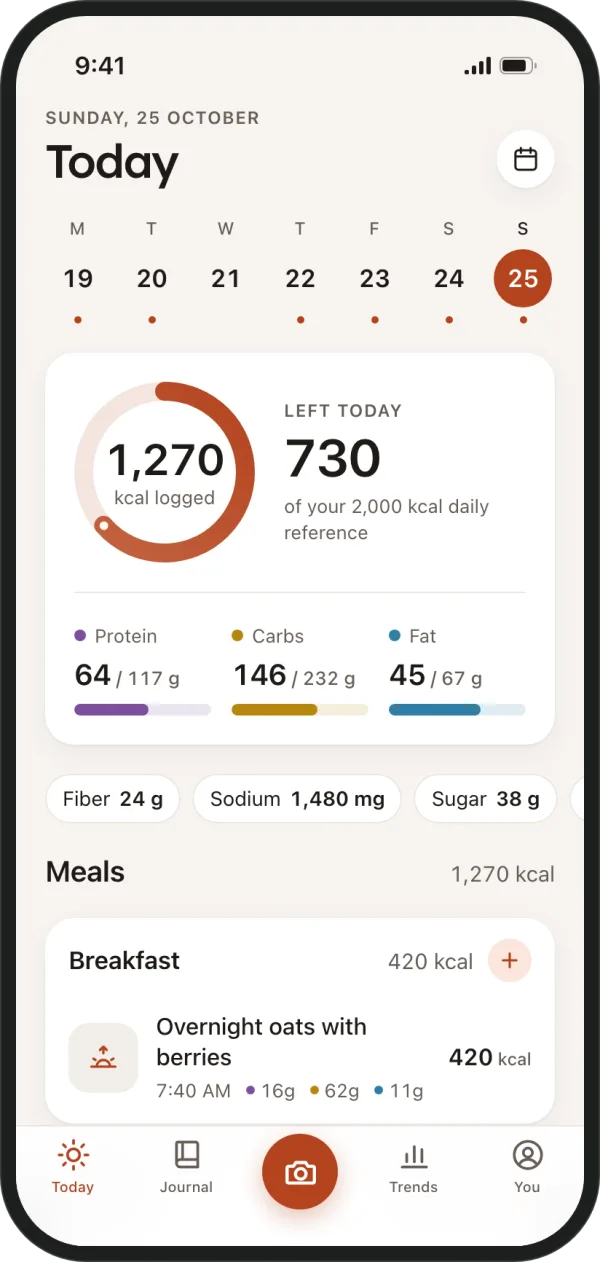
Mealglance shows protein in violet, carbs in gold and fat in blue next to calories for every meal and day. The names and gram amounts let you read the values without relying on color alone. You can check a meal’s estimate before it becomes part of your daily record.
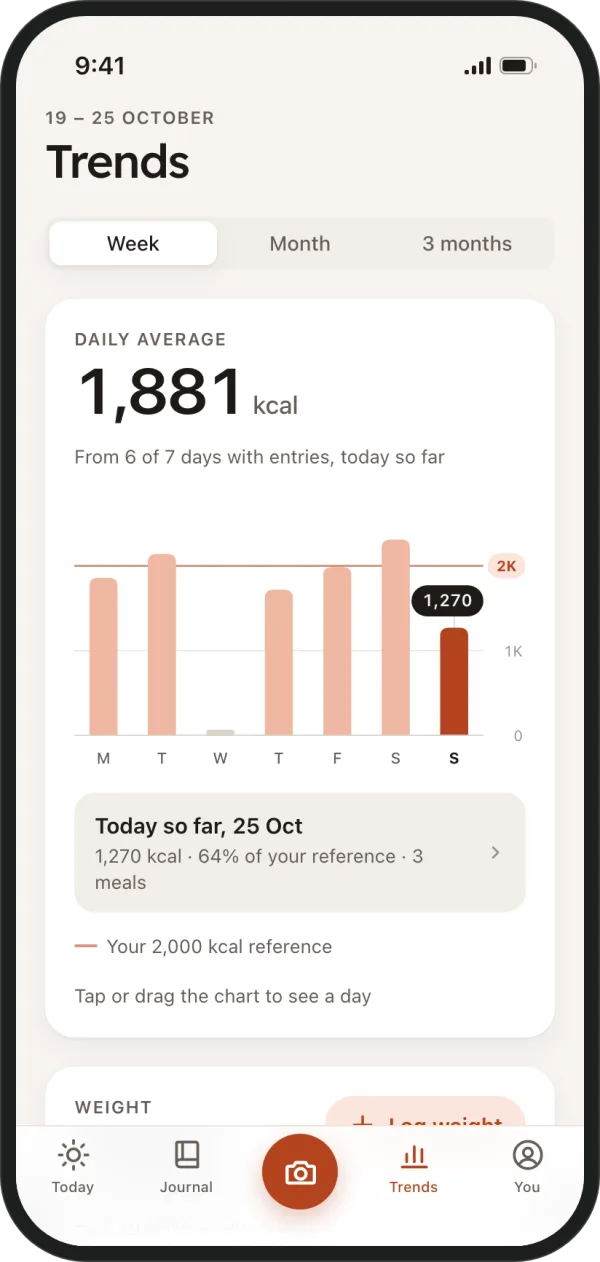
Trends shows the balance over a week or a month. That longer view helps you notice recurring patterns without treating a single meal as a verdict. If you want a starting point for daily energy, use the calorie calculator to find a daily reference, then view your meals alongside it.